Friday, 9 March 2012

The Raspberry Pi: huge demand and production setbacks


Raspberry Pi, a £22 device created to help children learn programming, was sold at the rate of 700 per second, 42,000 units per minute, at one point last week. The massive demand for the Raspberry Pi exceeded everyone’s expectations, it was 20 times greater than the company could supply.

Harriet Green, chief executive of Premier Farnell, said last week that the company will increase production of Raspberri Pi ‘as far as it can’ in order to meet demand instead of raising the price. The device itself is not expensive to make despite its ‘beautiful’ design. The cost will therefore remain £22 and the price will still be fixed by the charity that controls the production. The Raspberry Pi foundation has already sold its initial production run, around 10,000 units through two major distributors, Premier Farnell and RS. Their websites struggled to cope with the heavy traffic. The first version of the product, which sold out within minutes of going on sale, will first go to developers who can write supporting code and help develop the device. The initial design is a simple circuit board without the casing, however later models are expected to go on sale with packaging and may increase in price.

Unfortunately the Raspberry Pi foundation has already suffered a manufacturing setback which might cause delays in delivery to end users. There has been a part mix-up as the wrong ethernet jacks were soldered on, without integrated magnetic parts that provide network connection and help filter noise. Before the product can ship they will have to be removed and replaced. Installation of the correct jacks is quite simple, however sourcing the right components may prove challenging. One of the foundation’s representatives said in a statement: ‘We’re having to start again and move through the negotiating/ordering/delivery cycle as fast as we can.’

The simple device has also attracted interest from outside of the UK. A Middle East government, the country has not been revealed, contacted Raspberry Pi regarding its plans to issue one device to every schoolgirl in the country to increase their job prospects. The reason for such widespread interest, particularly from teachers and parents, may be a result of the concern over growing consumerism. Children that do not obtain basic technical knowledge at young age then lose interest and turn into consumers rather than creators and innovators. It is also important to include girls in the project as according to recent study most young women, between 13 and 18 years old, do not express any interest in computer technology or business study.

Online communities that formed around the Raspberry Pi and social media helped to keep the demand and curiosity high. The community that has already grown around the device is interested in developing and writing programs for it. So far the operating system for the product has been downloaded 30,000 times. As the project developed and matured, it exploded in popularity and attracted the interest of many Linux enthusiasts as well as some security researchers. Nadim Kobeissi, a developer of a secure communications program, hopes that the device can be used to bring secure communication to those whose free speech is threatened. Mr Kobeissi developed a secure communications program called Cryptocat which works inside a web browser and enables people to chat online via encrypted instant messaging. He plans to buy the small size computers to work as servers running Cryptocat. Because of their size and low-cost, Raspberry Pi are easy to ship to NGO’s and activists in places where free-speech is not accepted. Stephen Urbach of Telecomix supports the idea claiming that: ‘in the democratic and free countries where I do not trust my government because of data retention as in countries like Syria or the Bahrain where a wrong word can bring you to death, secure communication can save lives.’

Technological giants like Apple, Dell or Lenovo are also encouraged by Raspberry Pi developers to get involved in the development process to help with the innovation. If the powerful microprocessor that can currently be found in smartphones was applied to Raspberry Pi the idea could potentially grow extremely fast. Ms Green therefore welcomes interest and suggestions from other companies: ‘I would really encourage the major companies to have a look at the power of this idea.’

Thursday, 8 March 2012

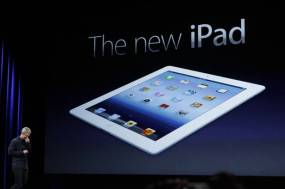
The new Apple iPad has been unveiled!

Apple has unveiled an updated iPad tablet with a high-definition screen and faster communications. These were the two most important expectations set for the device. At an event in San Francisco on Wednesday Tim Cook unveiled the third updated version of the tablet which he referred to as the ‘new iPad’ instead of giving it a specific name. It will become available on March 16 in the US and nine other countries: UK, Canada, Germany, France, Switzerland, Hong Kong, Singapore, Australia and Japan.The product looks and feels like iPad 2 although slightly heavier and thicker. Rupert Goodwins stated on his technology website: ‘Unless you are a big Apple fan it will look like any other iPad.’ Its starting price is also the same: $399 for the Wi-Fi only models, or $659 for models with Wi-Fi and 4G connectivity. The price of the iPad 2 is dropping to a starting price of $329. Apple tries to appeal to its users by the variety of technological improvements instead of the low price in its attempt to stay ahead of competitors.
The main features of the new iPad include HD retina display- an unusually sharp display, support for the 4G connectivity known as LTE (10 times faster than 3G found in the iPad 2) and a faster microprocessor chip with improved graphics performance that helps run realistic-looking videogames. It therefore seems like this new improved tablet is designed more as a tool for the creative class. The device important to Apple’s efforts to increase control over the number of activities consumers are able to do digitally. The new iPad proves that mobile devices such as tablets can in the future replace personal computers performing the same number of operations. Tim Cook talked on Wednesday about the ‘post PC era’; where PC is just a device not the centre of our technological world, and Apple’s dominance of it. He highlighted the company’s capability to create a broad range of digital devices that had become central part of consumers’ lives.


This launch is the first major event for Apple since the death of Apple co-founder Steve Jobs. Now Apple Executives need to show why all these innovations are worth it. Although the changes are not radical they seem to have met the expectations of technical analysts and Apple followers that have been speculating about the new device for months. Most technical experts are impressed by the improvements and believe the new iPad will sell well. However, others express their disappointment that Apple failed to include haptic touch-feedback technology in the display or access to the iPhone 4S’ voice-controlled Siri ‘intelligent assistant.’ So far there is no explanation as to why the device has not been given a specific name, like expected iPad 3, which may confuse the purchasers. It may be in connection to the trademark dispute raised by Proview but the only reason given was ‘because we don’t want to be predictable’.
Since the introduction of the first iPad in 2010, the firm grew rapidly taking over the tablet market. Despite many disputes and lawsuits, Apple continues to dominate the market, having sold over 50 million iPads so far. More than 83 per cent of all U.S. tablet users choose iPad according to eMarketer. The company, however may face a challenge from Microsoft once tablets running Windows 8 system go on sale as the improvements introduced are not considered enough to ensure Apple’s lead in the market.
During the event, Apple also mentioned that a new version of its Apple TV device with higher-resolution video would go on sale March 16. The product enables viewers to get Internet video on traditional TV as well as purchase movies via iTunes across Apple devices. The event was closed by Mr. Cook announcing that there is still more to come this year.

Wednesday, 7 March 2012

Former Olympus executives charged for their involvement in the accounting scandal


Olympus and three of its former executives; ex-chairman Tsuyoshi Kikukawa, former vice-president Hisashi Mori and former auditor Hideo Yamada, have been charged in connection with the £1bn accounting scandal. Three outside advisers, Akio Nakagawa, Nobumasa Yokoo and Taku Hada, have also been arrested for their alleged involvement in dubious acquisitions. In a recent statement Olympus said: ‘We take these charges very seriously and will continue to strengthen our corporate governance.’

The board initially denied hiding investment losses through complex takeover deals however they later admitted they had been falsifying securities reports for over twenty years. It proves that the firm has been badly managed for years. The scandal was brought to light by former chief executive Michael Woodford who questioned Olympus accounting practices, particularly the payment of $687m to financial advisers during the acquisition of UK medical equipment company Gyrus. He claimed he was later fired for the accusations. Mr Kikukawa resigned shortly after the scandal came to light in October however he was arrested last month, altogether with Mr Mori, Mr Yamada as well as former bankers and financial advisers for the company.


Olympus has been going through a tough time since the cover-up was revealed. The way it handled the crisis is also questionable as despite suing 19 people involved in the wrongdoing, some of those accused continued to work as board members. The company assures that the rest of the management involved will resign by April. In an attempt to recover from the situation Olympus proposed a new board of directors which will be subject to approval at an emergency shareholders' meeting next month.

However, because of the delay in sorting out the management issue, the scandal has already negatively affected the company. It cost Olympus its shares which plunged more than 50 per cent on the Tokyo Stock Exchange. The firm also made a 33.09bn yen (£269m) loss over the period. The TSE assured that the charges would not affect the company's current listing status although the firm was fined 10m yen by the exchange. It was decided in January that Olympus could keep its listing but would have to be put on a ‘security on alert’ as a company that needs to improve its internal management.

The firm is under investigation by law enforcement agencies in Japan, Britain and the United States. The Securities Exchange and Surveillance Commission (SESC) pressures the Financial Services Agency to fine Olympus more than 100 million yen ($1.2 million) for false accounting. Olympus itself is suing five of its internal directors, including current President Shuichi Takayama, for mismanagement.


Tuesday, 6 March 2012

The Windows 8 experience

On Wednesday 29 February, Microsoft introduced the consumer preview version of Windows 8 at the Mobile World Congress in Barcelona. Steven Sinofsky considers it the most important ‘generational change’ since Windows 95 that introduced Start menu and taskbar.

The new version attempts to bridge the gap between desktop, laptop and tablet. The software is available to download, before its public launch in a few months. Since Windows 7 is quite difficult to use on touch-screen devices, the new operating system is designed for the low power chips to be compatible with mobile phones and tablets in an attempt to effectively compete with Apple and Google: ‘We challenged ourselves to bring the best of mobility and the best of PCs, in an experience where you don't have to compromise.’ Steven Sinofsky chose to present its new operating system at the Mobile World Congress in Barcelona instead of the Consumer Electronics Show in Las Vegas which shows a new direction in Microsoft’s approach to computing.

Windows 8 has two modes: Metro-style, a modern mobile operating system built on a new ‘Windows Runtime’, and the standard Windows desktop, still needed by Microsoft for existing applications such as Office. In the Metro mode apps are installed from an online store, run full screen and are simple to use. Apps can run at the same time, but only two can share the screen, they also remain responsive when performing long operations thanks to the new runtime. Some important changes have been made since the Developer Preview. There are many more apps available which include Mail, Music, SkyDrive, and People. All store apps are free for the time being and will remain free until the commercial launch. The Metro-style Windows 8 performance of is excellent when tapping on-screen controls, using the keyboard or flipping through apps. Microsoft's social media account synchronisation also works great. As soon as you log into Windows Life  your contacts from Twitter (or other social networking site) are imported to the People app. Windows 8 will also use the cloud to store users' preferences so that they can automatically load when the user signs in.

Metro apps look quite different from the standard Windows apps that we are used to, with their clear design and bold controls. There are several swipe patterns set up to make the use of the tablet quicker and more convenient. Many familiar smartphone gestures; pinch to zoom out, tap to enlarge and swipe, remain featured. The mouse control has also been improved since the Developer Preview. When you move the pointer to the corner of the screen with your mouse you can perform common actions: access Start menu, Windows charms and switch apps. Finding applications however may prove frustrating at times as many of them are hidden and accessible only from the Start menu. There are two versions of the Internet Explorer included: the Metro-style Windows does pure HTML5 with no add-ins installed and the desktop mode has Adobeflash, Activex etc. Some sites therefore do not work on the Metro version but Microsoft is hoping that most sites will adapt to the changes. Another issue is whether it is possible to create a user interface that works as well with touch as with mouse or a keyboard. So far, it does seem that the Metro side works better with touch, while the desktop side is still difficult to use without peripherals.

It seems that most innovations were made to the Metro platform and therefore desktop Windows 8 users may feel disappointed by the new operating system. Some consider its features, designed mainly for the Metro-style software, awkward to use. However, a few changes to improve Windows’ overall performance have also been made, such as fast boot and smart networking that switches automatically to cheaper connections.

There are a lot of expectations set for Windows 8. Windows 7 sold 525m licenses however its popularity was only on PCs. The new software has a huge potential for success, its design is more elegant than Android and despite a few minor issues it works fine and is very convenient to use. The one obvious advantage of  is the possibility to access all desktop applications at any point on your tablet.This radical move however may run a risk of alienating ordinary Windows users. Furthermore, Microsoft cannot disregard its rivals. Windows 8 may find it difficult to get acceptance facing tough competition from Apple and Google.

Also see: Patent disputes: protecting manufacturers or threatening innovation?

Friday, 2 March 2012

Raspberry Pi expected to revive British IT education

Raspberry Pi, a credit card sized, low cost computer, created by volunteers from technical industry, has gone on sale this week. The machine is designed to help teach children to code. Enthusiasts believe this cutting edge technology will help to enhance programming skills in the UK. The demand for the device is already sky-high as some suppliers saw their websites crash under the heavy traffic. A test version of the Pi has already attracted bids of more than £3,000 in a fund-raising auction on eBay last week.

The machine runs on Linux, an open-source operating system, and is relatively easy to interface to other devices. It can be connected to a typical computer monitor with additional ports to attach a keyboard, mouse as well as an ethernet for high-speed internet connectivity. The Pi's inventors have drawn inspiration from the BBC Micro, a project produced by Acorn that was adopted by British schools. BBC Basic, the programming language on the devices, served as an introduction to programming.

The model that is currently available costs £22, however a cheaper version priced £16 will go on sale later this year. The Raspberry Pi Foundation claims it has already produced thousands of the machines, using a manufacturer in China but the volumes are likely to increase soon. The Foundation originally planned to open production in the UK however it was not possible to do so at the convenient price. The company has already set up deals with two distributors that agreed to handle orders and deal with manufacturers. Thanks to this success the foundation can now focus more on teaching the programme instead of concentrating on sales.

The timing to launch the product could not be better and the hopes for product’s success are running high. The Department of Education is currently looking to focus more on specific skills, like fundamental programming, when teaching computer science at school. Therefore, bear-bone machines like Pi are thought to encourage children to code and play an important role in future IT education.  Ian Livingstone, co-author of  the Next Gen report, suggests there is a need for an examination of how computer science taught in UK schools could better meet needs of visual effects industries. The report also stresses a general need for teachers's professional training in computer science. Despite the Raspberry Pi being simple enough to be used by non-specialists, in order to get the most out of the experience some level of IT expertise may be required.

The supporters of this initiative believe that the community that has emerged around the Pi will help with its innovation, improvements and creation of additional software. Further development will be possible because of the experience shared between owners the devices.


For the interested here are the specifications of Raspberry Pi:

Cost: Model A $25 (£16) and Model B $35 (£22)

Weight: 45g

Dimensions: 86mm x 54mm x 17mm

Power: 5v micro USB

Processor: ARM 11, 700MHz

Memory: Model A, 128MB and Model B 256MB

Connectivity: 10/100 wired Ethernet on model B

Operating system: RISC OS, Linux. Debian, Fedora and ArchLinux will be supported from the start.

Source: Raspberry Pi

Thursday, 1 March 2012

Apple worth more than most countries in the world!


Apple, world’s most valuable company, announced its market value closing at $542.44 on Wednesday. There are only six other US businesses that have ever passed the $500bn (£314bn) threshold: Exxon, Microsoft, Cisco Systems, Intel and General Electric. However, none of them are near it now, therefore Apple is currently the only firm priced that highly. Furthermore, there are only twenty countries in the world that reached the $500bn gross domestic product mark.

 The company’s sales and profits are growing at enormous rates as the popularity of its iPads and iPhones increases. It is expected to make a profit of $40bn in 2012 with its iPad3 launching next week. Its shares are already up 32 per cent this year. Apple has also approximately $100bn of cash on its balance sheet. Investors are hoping that the firm may use some of the reserve to pay out a dividend. Tim Cook assured shareholders that the board is thinking ‘very deeply’ about ways to use the cash.

This remarkable turnaround, for a company that used to be worth only $3.19, took place under Steve Jobs, the revival started with computers, then iPods, iPhones and iPads. Despite all patent and trademark disputes future remains optimistic for Apple, fuelled by the supposed launch of a new iPad next Wednesday. The new iPad is expected to secure Apple’s domination on tablet market and ensure further profit increase. 

Wednesday, 29 February 2012

'We have something you really have to see. And touch.' Technological Updates

There have been some exciting news in the world of technology, new products have just been launched (or are about to).
The first product worth mentioning is the PlayStation Vita, a portable gaming console launched by Sony.  Main features of the Vita’s features include: touchscreen, similar to those in smartphones, touch-sensitive panels on the back to increase gaming control, front and rear camera, access to the internet, as well as social networking sites such as Twitter and Facebook. The most basic model of the device sells at £219 and Sony hopes it will appeal to the gamers that would like to enjoy their favourite games from bigger consoles on smaller portable devices.

The new model comes at the time of financial struggle for the Japanese company which has recently reported losses of $2bn due to flooding of some of its warehouses. Despite that Sony has already spent $50m on the promotional activity for its new device. It seems somewhat extensive for a gaming console which cannot be used to make calls, send messages, record videos and play songs. However, as the company CEO Jack Tretton explained that the Vita brings social gaming to a whole new level and was created mainly for true enthusiasts looking for a better gaming experience.

Another creation that deserves the attention is iPad3 which will soon be launched by Apple, or that is what is expected. The company has sent out invitations to an event that will take place on 7th March in San Francisco however the purpose of the event has not been specified. The invitation read: ‘We have something you really have to see. And touch...’ Some shops, have already started discounting the iPad 2 model to make space for the new upgraded version and reports suggest that the new version of the iPad is already being shipped to the US. It was reported that Apple shares soared to $530 for the first time in the company's history after the invitations were issued.

This launch is considered the most significant event since the death of Apple co-founder Steve Jobs last year. It is claimed that the new model will have a quad-core processor, 4G and Long Term Evolution technology. A Retina Display is also widely hoped for, however the same expectations were set for iPad2. Judging by the success of Apple’s previous launches: the first iPad, that sold three million in 80 days after its release in 2010 and almost 15 million that year, as well as iPad2, which was bought by one million people in 28 days after launching, iPad3 can count on widespread interest.

In other news Samsung received two out of four most significant GSMA awards at Mobile World Congress. Samsung was announced the Device Manufacturer of the Year and its Galaxy S II was crowned the Best Smartphone, defeating Apple’s iPhone4 which was granted the award last year. Samsung was praised for ‘outperforming rivals in a tough market’ and its overall progress. The company seems to have dominated the smartphone market as its Galaxy S III, to be launched later this year, is supposed to raise the bar for Android devices.

Apple received the Best Mobile Tablet award for its iPad2, a product that ‘has defined the market and dominated sales.’ With iPad3, expected to come out in March, Apple became a major competitor in the tablet market. However, its dominant position may be threatened by some recent innovations: a string of tablets created by Google's Android operating system as well as new category of tablet devices powered by Microsoft's Windows 8 operating system. Microsoft will run through the details of Windows 8 on Wednesday at an event in Barcelona. It takes Microsoft one step closer to its goal: the ultimate integration of the PC, tablet, and smartphone experience, which Apple is also aiming to achieve with its iOS and OS X platforms.

It is comforting to see that new launches still take place despite patent and trademark battles that major technological players have been involved in recently. It confirms that innovation remains a central focus for manufacturers and not all efforts are concentrated on lawsuits and disputes.

Samsung | Sony | Apple | Microsoft